Guide
Cohiba Behike: BHK 52, 54, 56 and 58 Compared
Cohiba Behike is the line of Cuban Cohiba cigars that Habanos S.A. calls the most exclusive it has launched. Presented in Havana in 2010 and rolled at El Laguito, it is built around the scarce medio tiempo leaf and comes in four sizes: BHK 52, 54, 56 and, added in 2025, Behike 58. Choose by the time you have.
How do the Behike sizes compare?
The four sizes differ in length and ring gauge, not in strength: they run from 119 mm to 178 mm and from ring 52 to 58, and Habanos classes the whole Behike line as full.
| Size | Factory vitola | Length | Ring gauge (diameter) | Habanos strength | Smoking time (estimate) | Product page |
|---|---|---|---|---|---|---|
| BHK 52 | Laguito No. 4 | 119 mm (4.7 in) | 52 (20.6 mm) | Full | about 30 to 40 minutes | Cohiba Behike 52 |
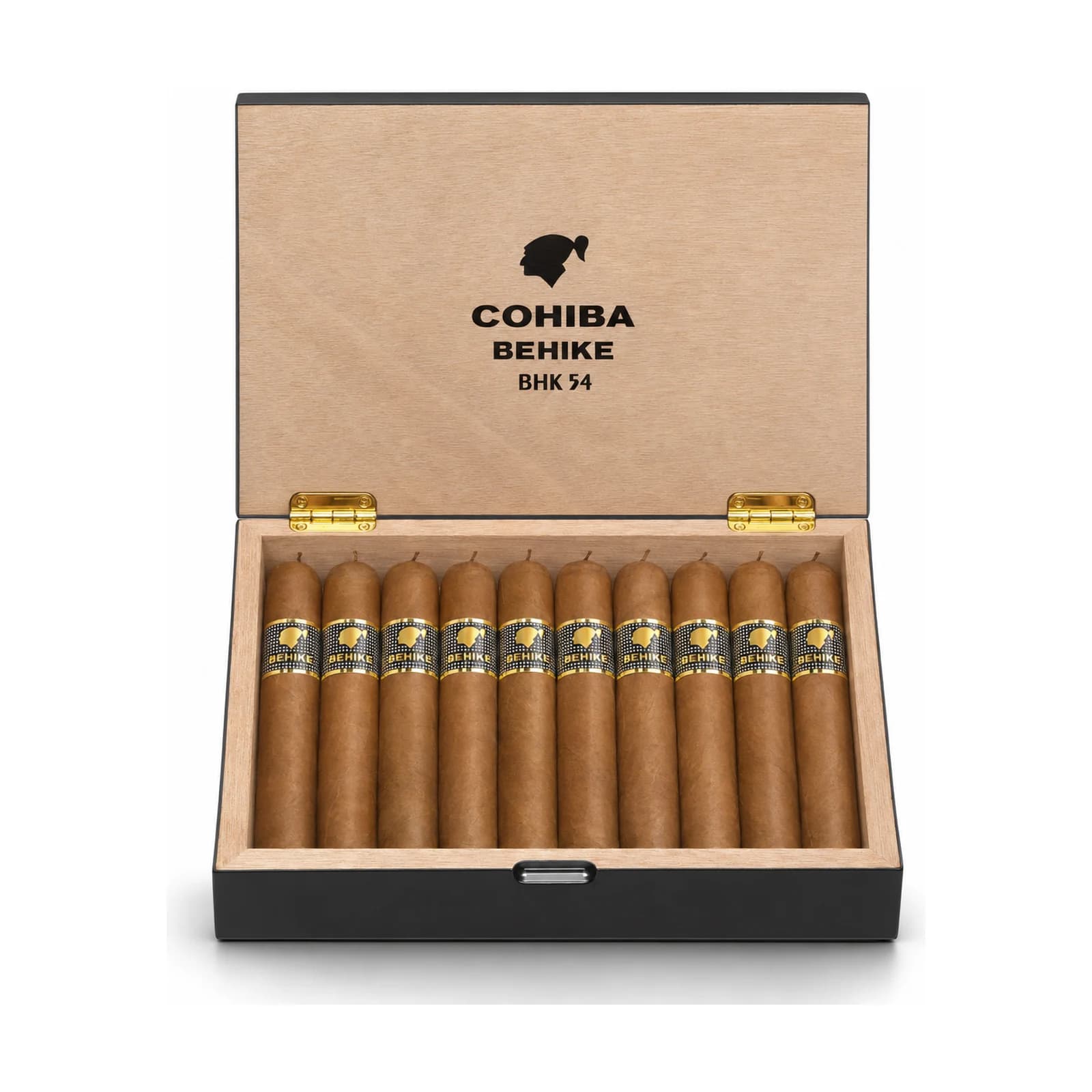
| BHK 54 | Laguito No. 5 | 144 mm (5.7 in) | 54 (21.4 mm) | Full | about 1 hour | Cohiba Behike 54 |
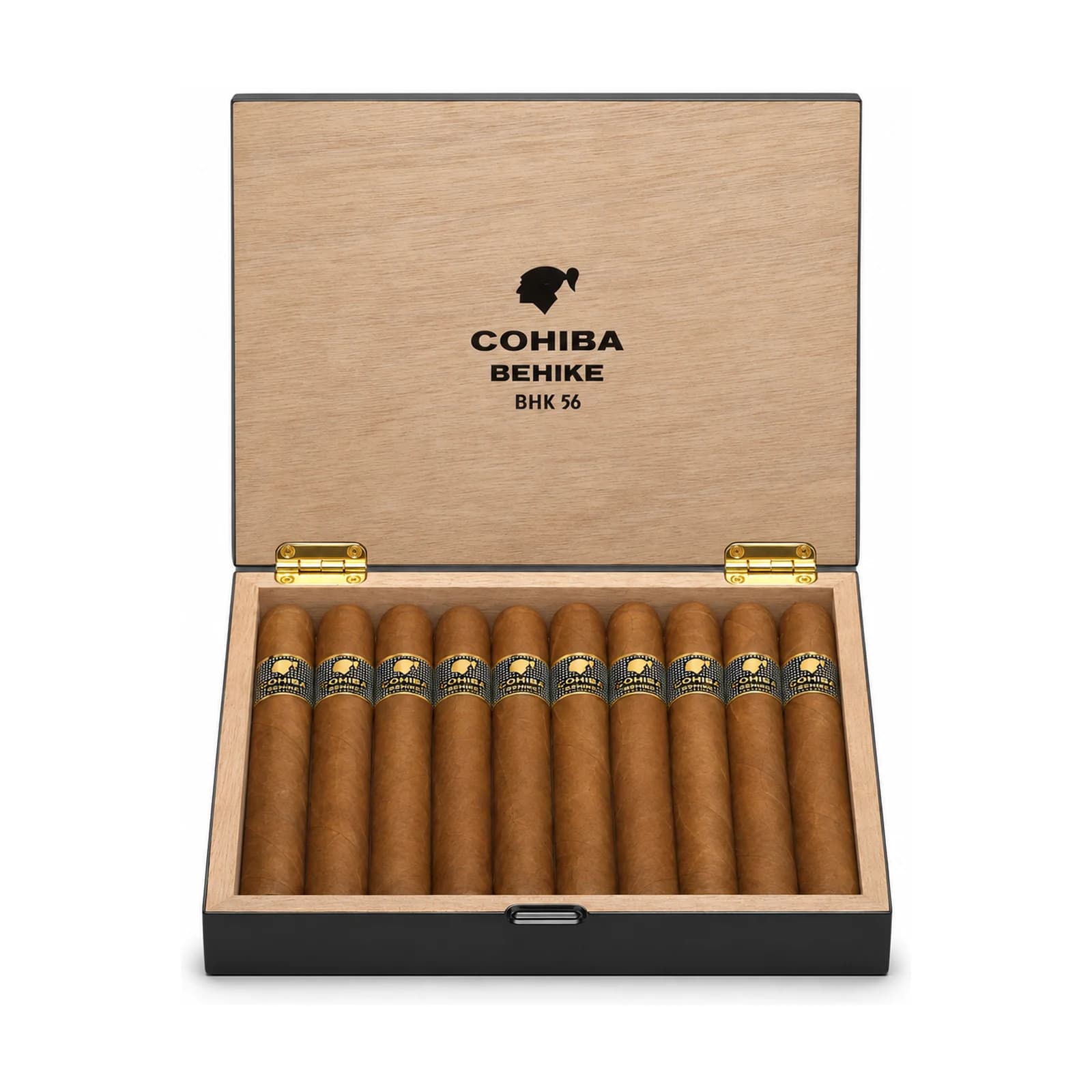
| BHK 56 | Laguito No. 6 | 166 mm (6.5 in) | 56 (22.2 mm) | Full | 1 hour or more | Cohiba Behike 56 |
| Behike 58 | Laguito No. 7 | 178 mm (7.0 in) | 58 (23.0 mm) | Full | 1 hour or more | No product page linked |
Length and ring come from the Habanos vitolario; diameter is ring gauge times 25.4 divided by 64. The factory vitola is the Havana workshop's Laguito name, while BHK 52 is the commercial name on the box. Smoking times are our estimates, not Habanos figures, set against times Habanos lists for similar formats: Petit Edmundo (110 mm, ring 52, 20 to 25 minutes), Edmundo (135 mm, ring 52, about 50), Cañonazo (150 mm, ring 52, about 1 hour) and Prominente (194 mm, ring 49, about 1 hour 15).
What is Cohiba Behike and where does the name come from?
Cohiba Behike is a line inside the Cuban Cohiba brand, alongside the Clásica, 1492 and Maduro 5 lines. Habanos announced it on 22 February 2010 at the XII Festival del Habano in Havana, and guests first tasted it at the gala on 26 February.
Habanos says the name is that of the person who led the Taíno tobacco ceremony. A December 2025 Habanos release says a former strategic marketing director recounts that the name first appeared on the Cohiba 40th anniversary humidor, before Habanos chose to launch a standard line with a more premium character.
Cohiba has been made at El Laguito in Havana since 1966, and all its vitolas are totally handmade with long filler, per Habanos. Our Cohiba brand page covers the other lines. Habanos announced Behike 58 in February 2025 for the festival gala marking the line's 15th anniversary.
What is medio tiempo, and why does Behike use it?
Medio tiempo is the strongest class of filler leaf, taken only from the two top leaves of the sun-grown plant, and Habanos says Behike's blend incorporated it for the first time. Habanos grades filler leaves from 1 to 4: volado, seco, ligero, medio tiempo. Very few vitolas carry the fourth grade, and plants yield it depending on each harvest's climate and cultivation.
At launch Habanos tied Behike's exclusivity to this leaf and said yearly production depends on how much is available. A 2025 Habanos release adds that Habanos and the Tobacco Research Institute identified the leaf and spent years perfecting the blend. No per-cigar proportion is published.
Why does Cohiba Behike cost so much?
Habanos attributes Behike's exclusivity to a scarce leaf and limited yearly production, and it publishes no cost breakdown, so none is guessed here. No price is typed in this guide either, because figures go stale: each product page shows its live price table.
Scarcity and allocation
Habanos says Behike is produced each year in extremely limited quantities, following the supply of medio tiempo. Limited supply of a sought-after name generally lifts cost; that is an inference, as Habanos publishes no allocation figures.
Leaf selection
Cohiba leaves come from selected vegas of San Juan y Martínez and San Luis in Pinar del Río, and Cohiba is the only Habanos brand whose seco and ligero leaves get an additional fermentation. Both points apply to the whole brand; medio tiempo is the leaf Habanos ties to Behike's exclusivity.
Boxes, jars and presentation
At launch each size came in a lacquered box of ten, with a band carrying two security holograms. In 2025 Habanos announced renewed boxes and bands with NFC technology. A jar changes the pack count, so compare cost per cigar only between equal counts.
Counterfeit risk
A costly, widely recognized name is an obvious target for imitation; that is an inference, and the checks below answer it.
Which Behike size should you choose?
Choose by the time you have, because all four sizes share the same Habanos strength classification, full. Habanos' own advice to experienced smokers is that the time they have is the main guide. By that rule: the BHK 52 for a short sitting, the BHK 54 for about an hour, the BHK 56 or Behike 58 for an unhurried evening.
Ring gauge matters too: Habanos notes a thicker cigar burns more slowly, with more smoke and a more intense flavor, and a thinner one smokes faster with a sharper flavor.
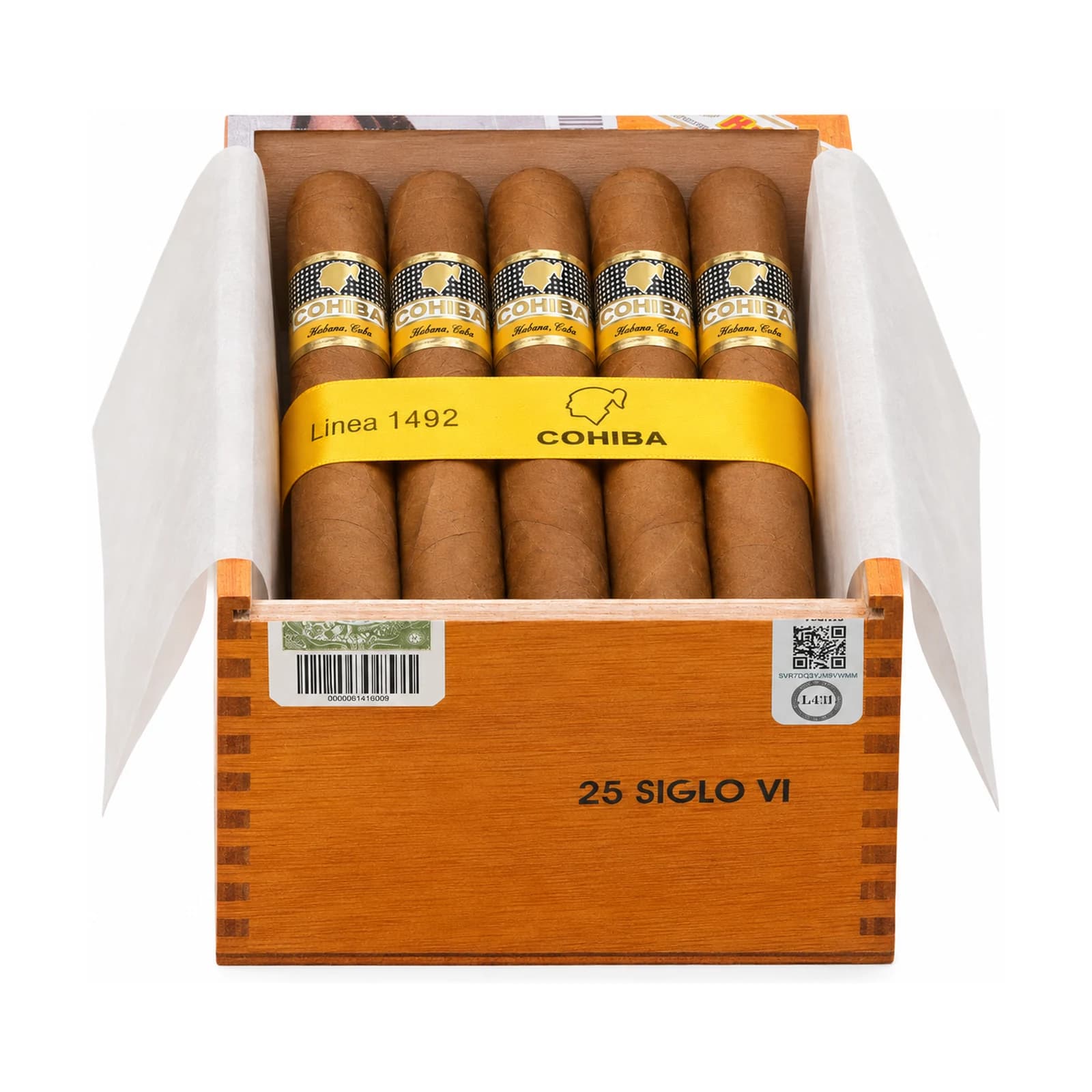
Outside the Behike line, a comparable footprint is the Cohiba Siglo VI (150 mm, ring 52, factory name Cañonazo), 6 mm longer and 2 ring gauge thinner than the BHK 54 (144 mm, ring 54). The Habanos vitolario lists the Siglo VI as medium and every Behike size as full, so the documented differences are line and leaf, not size. Habanos tells newcomers to start with a reference vitola such as the Mareva and a lower-strength brand; our reading is that a full-strength line is an unusual first cigar.
What is the Behike ceramic jar?
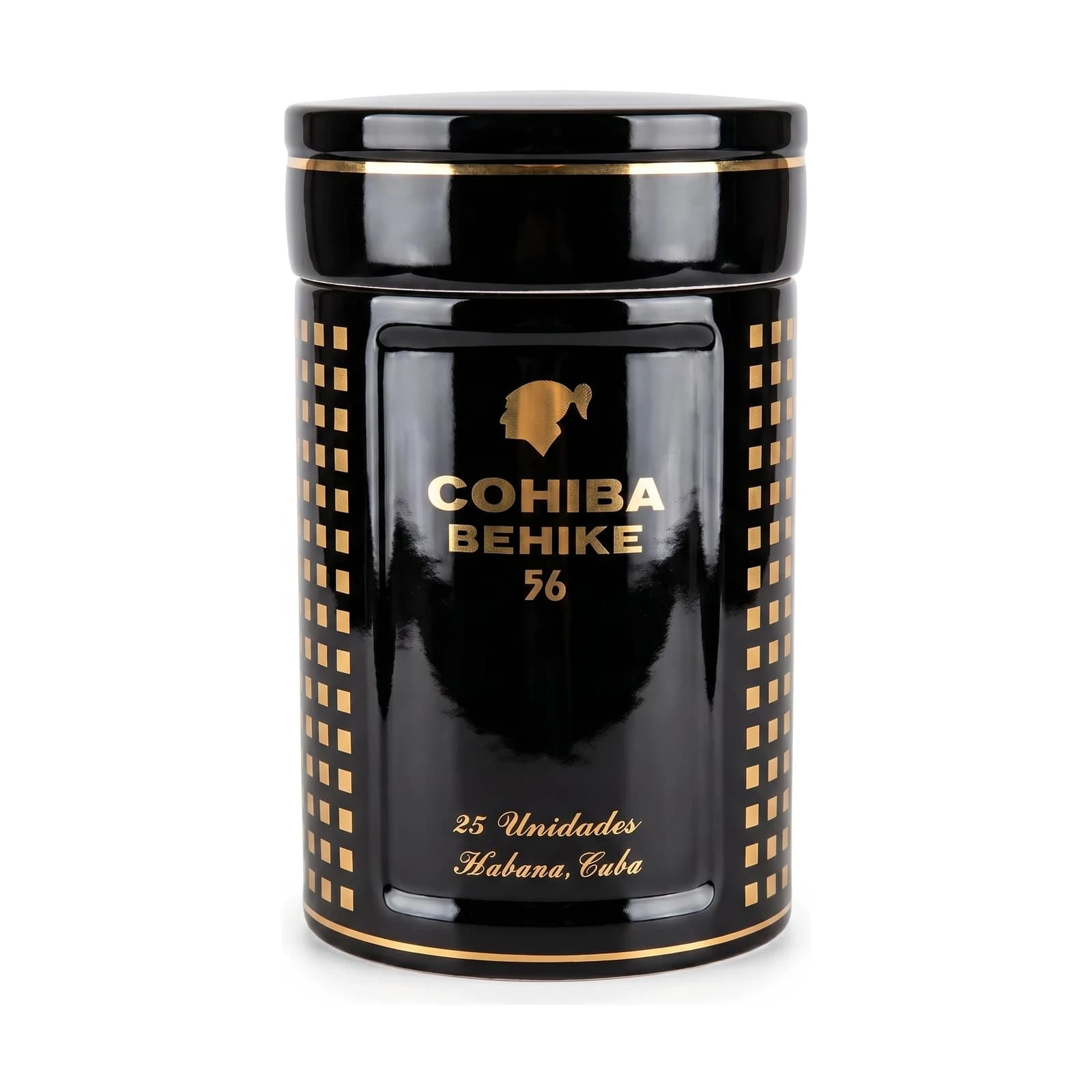
The ceramic jar is a pack format, not a separate size: the Cohiba Behike 56 Ceramic Jar page lists the same 166 mm, ring 56 size as the BHK 56 and a count of 25, against the launch box of ten. The sources behind this guide do not describe the jar itself, so read the product page for what is included.
How do you check a genuine Behike before buying?
Check the seller, the warranty seal, the band and the box codes, in that order, and use the official Habanos verification page for the box barcode.
- Seller. Habanos advises buying only from recognized, authorized shops.
- Warranty seal. Since 2009 it carries a hologram and a barcode unique to each box, on synthetic paper that is destroyed if peeled off. Enter the barcode on the Habanos verification page. A recognized code speaks for the box, not for every cigar inside; that limit is ours.
- Band. Behike bands have carried the Cohiba Indian head in embossed holographic paper and a security hologram since 2010. Habanos changed the hologram in 2014, with old and new side by side in shops for some months, so, in our reading, an older design alone is not a warning sign. Renewed NFC bands were announced in 2025; compare against current Habanos material.
- Box codes. Under the box sit two ink stamps: a factory code and the month and year of closing, with two-digit years since 2000.
Our real vs fake Cohiba guide covers the checks shared by every Cohiba line, and Vitola Room's signs of a fake Cohiba details what to compare on box, band and cigar. This guide does not say whether you may buy or import Cuban-origin cigars where you live; for the US position, with dated primary sources, read Are Cuban cigars legal in the US? Neither page is legal advice.
What mistakes do buyers make with Behike?
Buyers most often match by name only, trust a single check or compare unequal packs.
- Matching by name only. The BHK 54 and BHK 56 differ by 22 mm in length, so check length and ring in a listing against the table.
- Treating a valid barcode as proof of every cigar. It identifies the box; inspect the cigars too.
- Rejecting a genuine box for older packaging. The hologram changed in 2014 and the look in 2025.
- Comparing unequal packs. A box of ten and a jar of 25 compare only per cigar.
Is Cohiba Behike worth it?
Worth is a personal call. The documented case for Behike is exclusivity and a rare leaf. Habanos credits that leaf with exceptional character and flavor but publishes no flavor comparison with other Cohiba lines, and says flavor can only be judged by smoking. Our decision rules, not facts:
- Choose Behike if the medio tiempo leaf or its limited production is your reason; Habanos documents both.
- Choose a Cohiba that Habanos lists as medium, such as the Siglo VI, to learn the brand first.
- Start with one size; the BHK 54 sits mid-range in length and time.
This guide is for adults of legal smoking age. Cigars are tobacco products: the US National Cancer Institute states that cigar smoking causes cancers of the oral cavity, larynx, esophagus and lung, that cigars are addictive even when the smoke is not inhaled, and that there is no safe level of tobacco use (checked 2026-11-18).
Frequently asked questions
How much is a Cohiba Behike?
The price of a Cohiba Behike depends on the size and the pack, and it is shown in the price table on each product page, not in this guide. Compare listings only at the same pack count. Live figures are on the Behike 52, Behike 54 and Behike 56 pages.
Why are Cohiba Behikes so expensive?
Habanos attributes the exclusivity of Behike to medio tiempo, a very scarce leaf found only in the two top leaves of sun-grown plants, and to limited yearly production that follows how much of that leaf is available. Habanos publishes no cost breakdown, so this guide assigns no share of the cost to any factor.
What is Cohiba Behike?
Cohiba Behike is a Cuban cigar line from the Cohiba brand, presented by Habanos S.A. in Havana in February 2010 and made at El Laguito. Habanos says its blend incorporated the scarce medio tiempo leaf for the first time. It now has four sizes, BHK 52, 54, 56 and Behike 58, all classed by Habanos as full.
How can you tell a fake Cohiba Behike?
Start with the seller and the box seal: Habanos says the warranty seal carries a hologram and a barcode unique to each box, which you can check on the Habanos verification page. Then compare the band, since Behike holograms changed design, and read the box codes. No single check proves every cigar inside.
Where can you buy Cohiba Behike?
Habanos recommends buying only from recognized, authorized shops, a test to apply to any seller, this site included. This site has product pages for the Cohiba Behike 52, 54 and 56 and a ceramic jar, each with its own price table. Run the authenticity checks above first and confirm what the rules where you live allow.
Is the Behike 56 worth it?
That depends on what you want. Habanos documents exclusivity and a scarce leaf, publishes no flavor comparison with other Cohiba lines and says flavor can only be judged by smoking. If rarity and an unhurried hour or more appeal, the 56 fits; otherwise a Cohiba that Habanos lists as medium, such as the Siglo VI, may suit better.
Which sources does this guide use?
Written by the Vitola House editorial team; updated November 2026. Habanos pages are in Spanish. Sizes, dates and classifications were checked against them on 2026-11-18.
- Habanos S.A., Nace Cohiba Behike, la línea más exclusiva de Habanos S.A., 22 February 2010.
- Habanos S.A., La exclusividad de Cohiba Behike clausura el Festival del Habano, 28 February 2010.
- Habanos S.A., Nuevo holograma en la anilla de Cohiba Behike, 29 May 2014.
- Habanos S.A., Results and launches presented at the XXV Festival del Habano, 24 February 2025.
- Habanos S.A., La Magia del Behike, 16 December 2025.
- Habanos S.A., Vitolario and Marca Cohiba, checked 2026-11-18.
- Habanos S.A., Principales formatos, Anatomía de un habano and Elección, corte y encendido, checked 2026-11-18.
- Habanos S.A., Denominación de origen and Verificación de autenticidad, checked 2026-11-18.
- National Cancer Institute, Cigar Smoking and Cancer, checked 2026-11-18.