Guide
Real vs Fake Cohiba: 6 Checks for a Genuine Cuban Cohiba
A genuine Cuban Cohiba comes from a seller that can name its supplier (Habanos advises authorized shops), in a box with the Cuban Government warranty seal and hot-stamped base marks, and holds cigars that fit the vitola printed on it. No single sign proves a Cohiba is real, so judge seller, packaging and cigars together.
| Check | What to look at | What a pass does not prove |
|---|---|---|
| Seller | A seller that can name its supplier; Habanos advises authorized shops | That this box is untouched |
| Warranty seal | Hologram on the right, barcode on the left, no lifted edges | That the cigars inside are right |
| Habanos code check | The seal's barcode entered on the Habanos Authenticity Check page | That every cigar inside is genuine |
| Box base | "Hecho en Cuba", "Habanos s.a." (since 1994) and "Totalmente a Mano" hot-stamped, plus two ink stamps | That the seal is not a copy |
| Band | Clean print, firm glue, same look across the box | That the cigar under it is a Cohiba |
| Cigars | Length and ring gauge fit the vitola named on the box | That the box and seal are genuine |
Run the checks top to bottom and stop at the first one you cannot pass; a pass never covers another row. This guide covers only the Cuban Cohiba, the Habanos S.A. brand (see the last question). Sources checked on 18 November 2026 by the Vitola House editorial team.
Who should you buy a Cohiba from?
Habanos advises always buying at authorized shops (Habanos, Marks of distinction, checked 18 November 2026) and in February 2025 named La Casa del Habano, Habanos Point, Habanos Specialist and Cohiba Atmosphere as official points of sale. Whoever sells you a box, this site included, should be able to name its supplier; a seller who cannot say where a box came from has failed the first check.
What do the seal and the Habanos code check show?
The seal shows that a Cuban Government label sits on the box, and its barcode lets you ask Habanos about that one box. Habanos describes the current seal as synthetic paper that destroys itself if removed, with a hologram band on the right and a barcode unique to each box on the left, applied from the upper left side of the box, 3 to 6 mm (0.12 to 0.24 in) from the edge.
The Habanos Authenticity Check page leads to a form that asks for the product's code. It does not describe what a result looks like, so read a result as one more fact to compare with the box. A match speaks for the box, not every cigar, and a failed lookup is unresolved rather than proof of a fake. Habanos dates the two latest seal redesigns to 1999 and 2009, so advice written before 2009 cannot describe the current seal; the Habanos warranty seal entry on Vitola Room has the history.
What should the base of a Cohiba box say?
Expect "Hecho en Cuba" and "Totalmente a Mano" hot-stamped on the base of any standard Cohiba box made in 1989 or later. Habanos says every Cohiba is handmade with long filler and that long-filler boxes have carried "Totalmente a Mano" since 1989. Habanos describes boxes stamped "Habanos s.a. Hecho en Cuba" without "Totalmente a Mano" as machine-made, so on a Cohiba that omission is a mismatch to question.
Beside them sit two ink stamps: a factory code Habanos keeps secret and the month and year of boxing. Since 2000 the year is two digits and the month a Spanish abbreviation such as ENE or DIC; stamps from 1985 to 1999 were coded. Reading box date codes on Vitola Room has the full scheme.
How much can a Cohiba band tell you?
Very little on its own, so weigh it against the box. The security features Habanos describes belong to the warranty seal, and the Habanos pages cited here give no band template. A 2017 Habanos news item on forensic training in Brazil lists bands as one of eight topics beside seals, codes and the box. A band that disagrees with the rest of the box is a reason to ask.
Does the cigar match the vitola on the box?
It should: length and ring gauge need to fit the Habanos catalog entry for the vitola named on the box (sizes below from the Habanos vitolario, fetched 17 November 2026).
| Name on the box | Factory vitola | Length | Ring gauge | Product page |
|---|---|---|---|---|
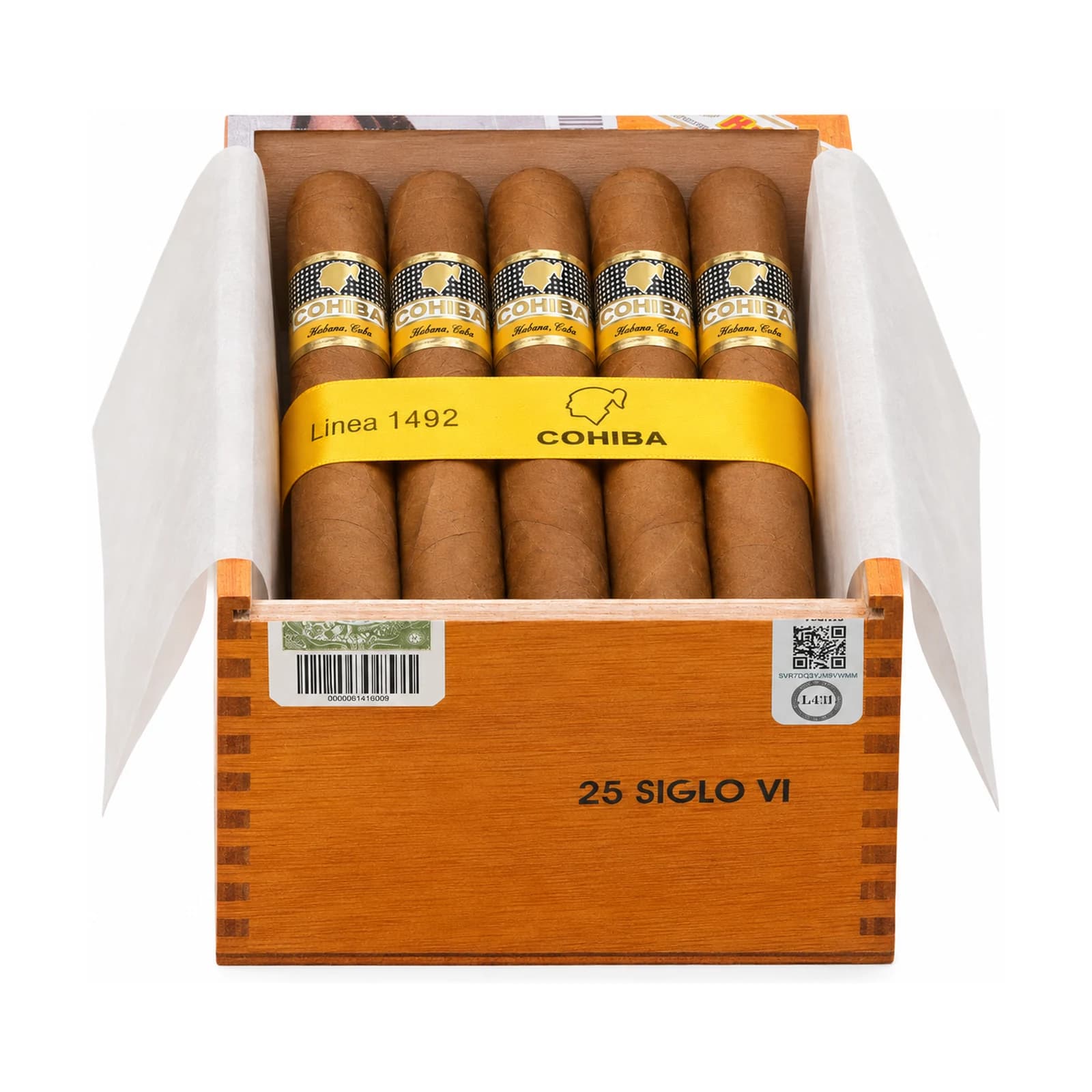
| Siglo VI | Cañonazo | 150 mm (5.9 in) | 52 (20.6 mm) | Cohiba Siglo VI |
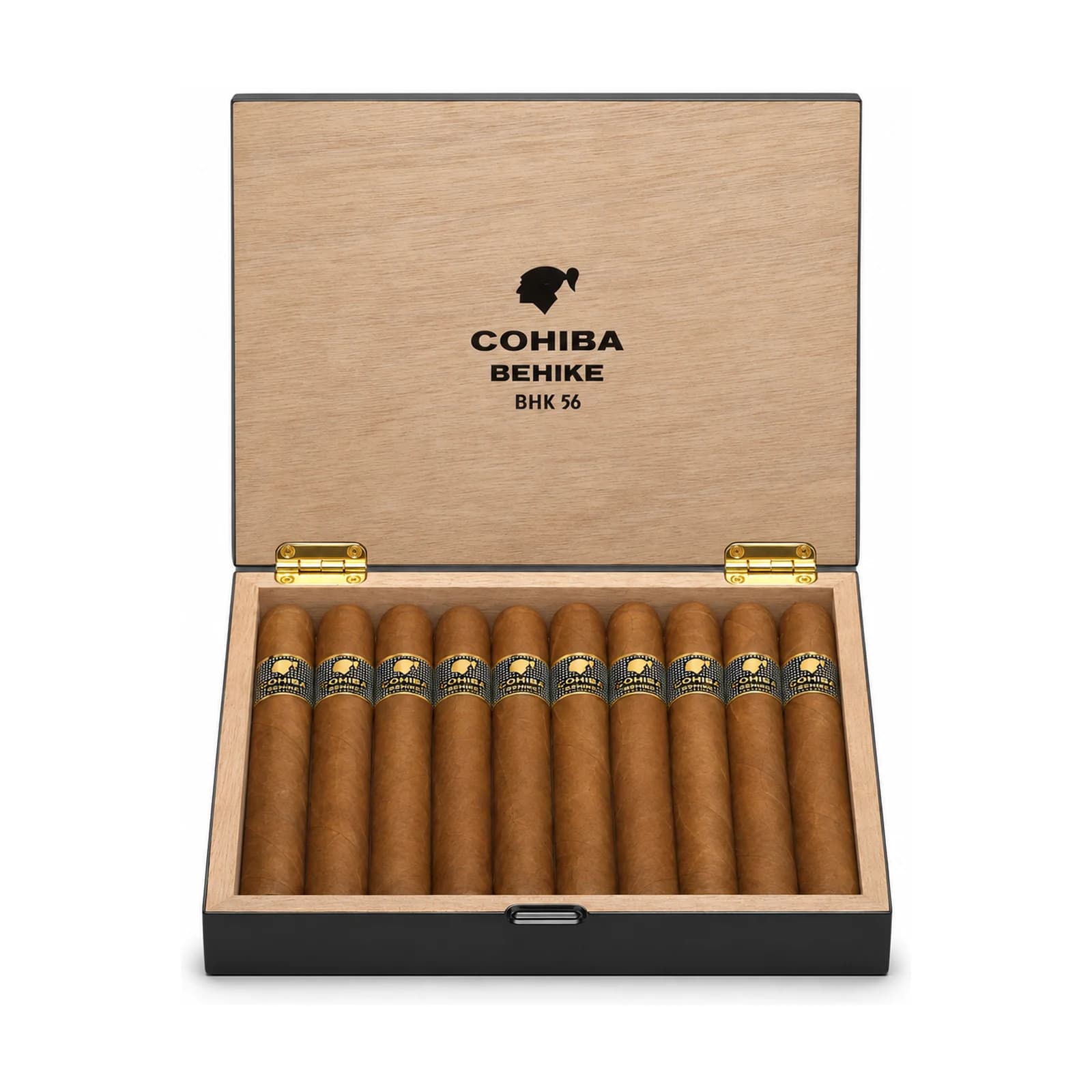
| Behike 56 (BHK 56) | Laguito No. 6 | 166 mm (6.5 in) | 56 (22.2 mm) | Cohiba Behike 56 |
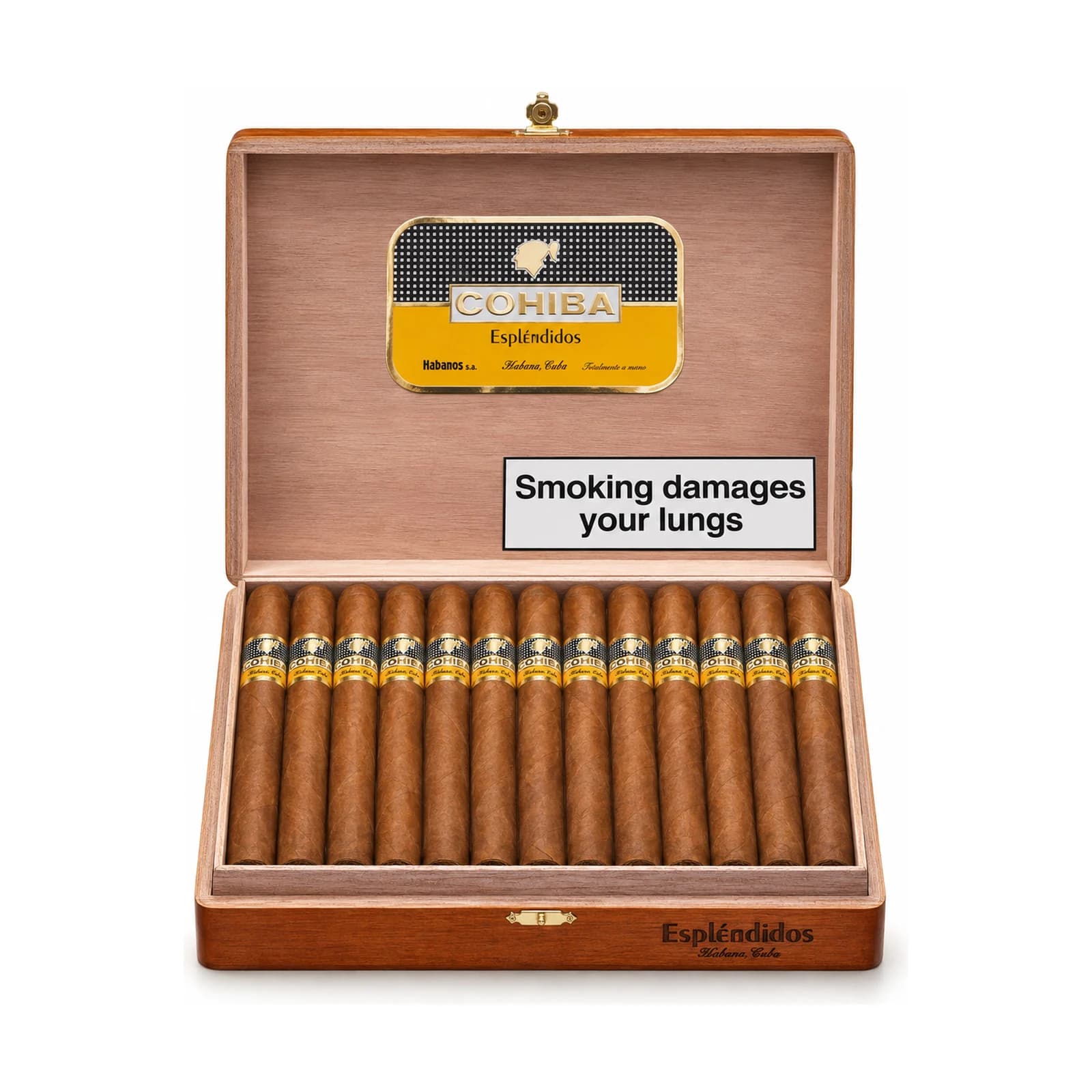
| Espléndidos | Julieta No. 2 | 178 mm (7.0 in) | 47 (18.7 mm) | Cohiba Esplendidos |
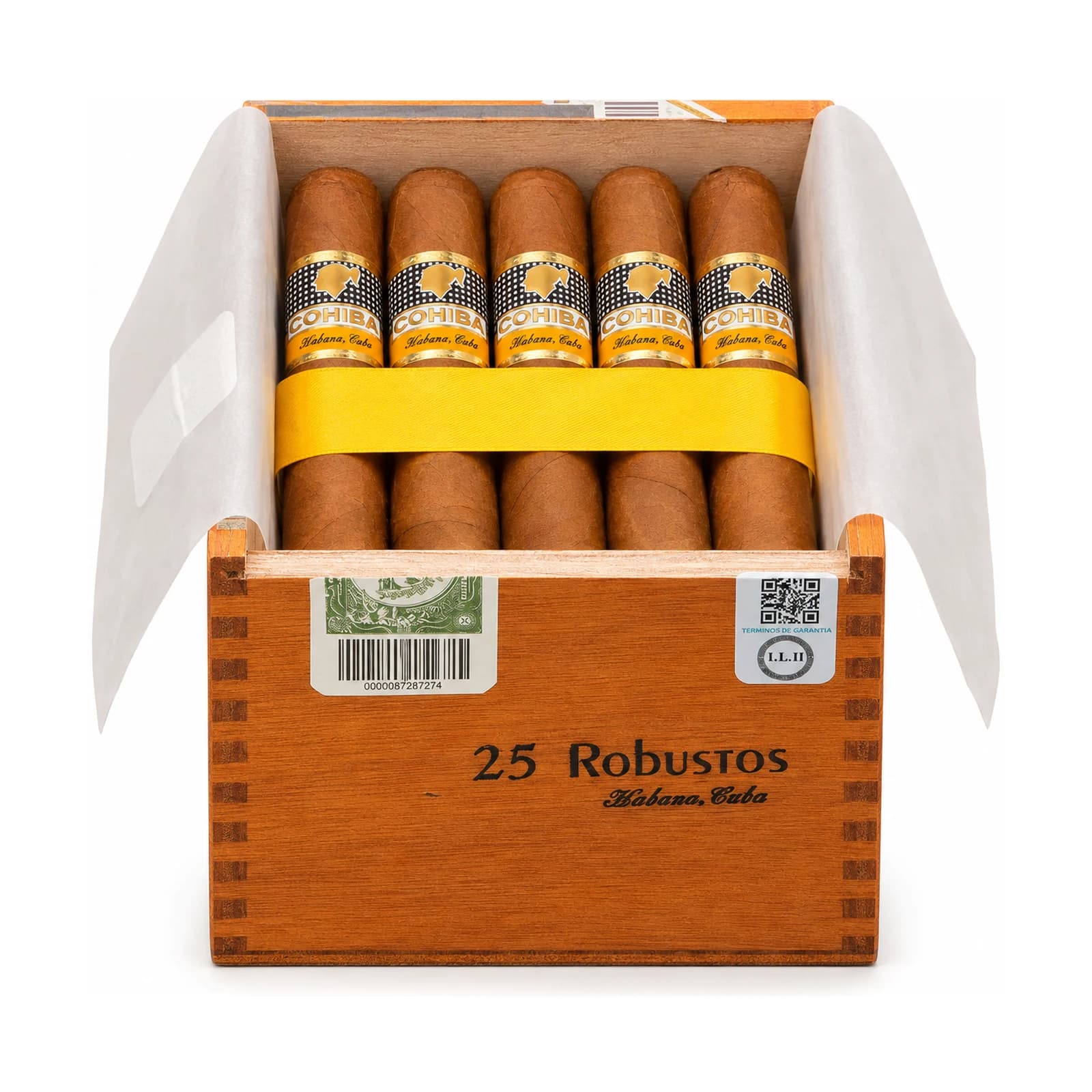
| Robustos | Robustos | 124 mm (4.9 in) | 50 (19.8 mm) | Cohiba Robusto |
Habanos lists catalog sizes and the cigars are hand rolled, so a few millimeters is not evidence; a cigar clearly off the listed size, or a vitola missing from the vitolario, is a question to ask. The regular catalog has four Behike sizes (52, 54, 56 and 58). The Habanos pages cited here describe no features specific to Behike, Siglo VI or any other line. See the Cohiba range.
Is a cheap Cohiba a fake?
Not necessarily, but an unusually low asking price is a reason to slow down and run every check before you pay. A high price proves nothing either: a 2017 news item on habanos.com linked high taxes and high prices in Brazil to a high level of counterfeiting and smuggling there. Each product page shows the current box price.
What should you do if a check fails?
A failed check is a reason to stop and ask, not a verdict by itself. Photograph the box before opening it, then ask the seller.
| What you see | What it suggests | What to do |
|---|---|---|
| Seller cannot name a supplier | Unknown provenance | Stop before paying |
| Seal missing, lifted or re-stuck | The label can no longer vouch for the box | Ask for an explanation; walk away without a clear one |
| Code check finds no match | Unresolved: a typo, a service problem or a bad label all fit | Retype once, retry later, then ask the seller |
Frequently asked questions
How do I tell if a Cohiba is real?
Run six checks in order: seller, warranty seal, Habanos code check, box base, band, then the cigars against the catalog size. No single pass proves a Cohiba is genuine, and a single failure is a reason to stop and ask, not a verdict.
How can I tell if a Cohiba box or band is real?
Look for an undisturbed warranty seal and "Hecho en Cuba" and "Totalmente a Mano" hot-stamped on the base. The Habanos pages cited here describe no band security test, so compare the band with the box and never rely on it alone.
How do I tell a fake Cohiba Behike, Siglo VI or Espléndidos?
Use the general checks, then the size, as the Habanos pages cited here describe nothing specific to one line. Habanos lists the Siglo VI at 150 mm (5.9 in) with a 52 ring (20.6 mm) and the Behike 56 at 166 mm (6.5 in) with a 56 ring (22.2 mm); a cigar clearly off its size needs explaining.
Can I verify a Cohiba box code online?
Yes, Habanos runs an official Authenticity Check built on the warranty seal's barcode; start from its page on habanos.com and enter the code. A match speaks for the box, not every cigar, and a failed lookup is unresolved rather than proof of a fake.
Are counterfeit Cohibas safe to smoke?
No cigar is safe. The National Cancer Institute says all tobacco products are harmful and cause cancer, that cigar smokers become addicted to nicotine, and that one cigar can potentially provide as much nicotine as a pack of cigarettes. If you doubt a cigar, do not smoke it. This is not medical advice.
Does Cohiba make Cuban cigars?
Yes. Habanos says Cohiba was created in 1966, is made at El Laguito in Havana and is entirely handmade. In a December 2009 notice it also said a US company sells a Dominican-made cigar under the Cohiba name; non-Cuban Cohibas are separate products, so this guide's checks do not apply to them.